Real Milk Updates, Winter 2025
February 24, 2026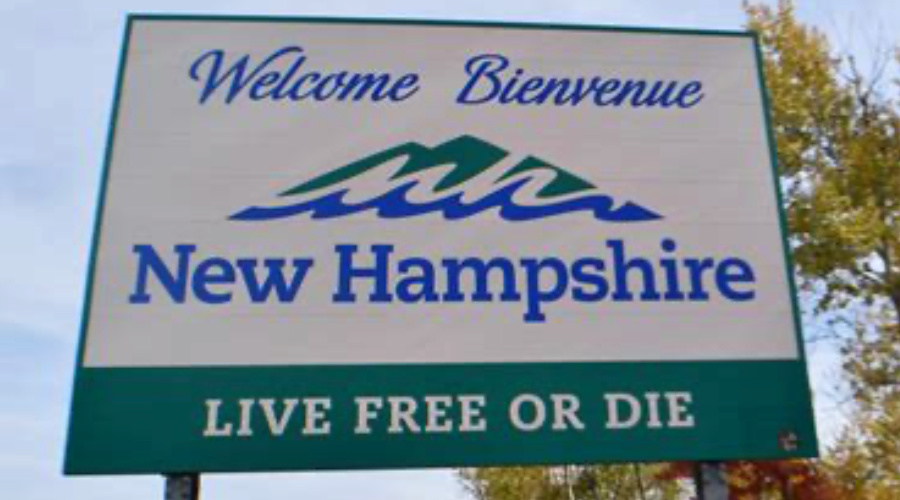
New Hampshire state motto: “Live Free or Die”
One of the more important bills in the state Houses in this session is New Hampshire House Bill 396 (HB 396), legislation that would allow the sale of on-farm slaughtered meat by a producer from no more than three beef cows, five swine, ten sheep, ten goats, or a combination thereof per month. HB 396 passed out of the House on January 7; a hearing was held in the Senate Commerce Committee on February 10th, but the committee has not yet decided whether to send the bill to the full Senate for a vote.
A clause in HB 396 provides, “Any farm that slaughters and butchers its own beef cows, swine, sheep, or goats under this chapter with intent to sell the meat in intrastate commerce shall register with the department of agriculture, markets and food. A representative of the farm shall sign a statement in such registration acknowledging that by not processing its own beef cows, swine, sheep, or goats at a United States Department of Agriculture facility the farm is violating federal law and could be subject to federal prosecution” [1].
The United States Department of Agriculture (USDA) is monitoring the progress of HB 396. The Federal Meat Inspection Act (FMIA) prohibits the sale of uninspected on-farm slaughtered and custom slaughtered meat in either interstate or intrastate commerce. In this context, “inspected” means a state or federal inspector is present when slaughtering and processing is taking place.
In a December 18, 2025 letter to New Hampshire Department of Agriculture Commissioner Shawn Jasper, as well as the clerk of the state House of Representatives, a USDA official confirmed the bill was a direct violation of the FMIA and encouraged the state to work with USDA’s Food Safety Inspection Service (FSIS) in expanding its slaughterhouse capacity [2]. If the New Hampshire legislature decided to challenge the FMIA by passing the bill, few states would be in a better position to do so. If a bill like HB 396 passed in any state, FSIS would move to shut down the state meat inspection program, as well as any slaughterhouse with a grant of federal inspection. New Hampshire has no state meat inspection program and only four federally inspected slaughterhouses. Is it possible that state livestock farmers would have access to USDA plants in neighboring Massachusetts, Vermont and Maine if there was a federal shutdown.”
The late state representative Sue Wallis, the original sponsor of the Wyoming Food Freedom Act, considered legislation that would have both allowed for the sale of on-farm slaughtered meat and specific funding for the Wyoming Attorney General’s office to litigate with USDA over the matter. If HB 396 is signed into law, the state could allocate funding for litigation with the Feds. Possible support in the way of an amici brief could come from Wyoming, which has a law (Wy. Stat. 11–49–103) [3] legalizing the sale of both on-farm slaughtered and custom meat, contingent on there either being an act of Congress or a federal court decision in Wyoming’s district. Another possible amici brief could come from South Dakota, which passed a law (House Bill 1064) earlier this year legalizing the sale of custom meat direct to the consumer under certain conditions contingent, again, on an act of Congress or a federal court decision in South Dakota’s district [4].
Even if the legislature does not provide funding for litigation, there can still be a lawsuit from a livestock farmer against USDA over the department shutting down implementation of the law as long as the legislature didn’t subsequently amend or rescind HB 396. In 2016, the Maine legislature convened a special session to rescind a provision in its recently passed Maine Food Sovereignty Act that allowed the sale of on-farm slaughtered meat from producer direct to consumer in towns passing a food sovereignty ordinance. The rescision came after USDA threatened the state with the loss of its meat inspection program.
It’s not like HB 396 is authorizing any activity that hasn’t been legal before. The original FMIA had a clause stating, “That the provisions of this act requiring inspection to be made by the Secretary of Agriculture shall not apply to animals slaughtered by any farmer on the farm and sold and transported as interstate and foreign commerce” [5]. At the time when the 1967 Wholesome Meat Act (WMA) passed, there were seven states without a meat inspection program [6] where the sale of on-farm slaughtered meat was likely still legal; New Hampshire was one of them.
To say the WMA has been a disaster would be an understatement. The act was pushed as a consumer protection bill but has turned out to be an industry consolidation measure. The WMA preempted state regulation over intrastate meat commerce and increased the cost of compliance for slaughter plants, without any corresponding benefit for the public health. Thousands of slaughterhouses went out of business in the years after the WMA passed.
As early as 1971, a Small Business Administration paper to the United States Senate Select Committee on Small Business reported on the disastrous effects of the WMA. The report was titled “The Effects of the Wholesome Meat Act of 1967 upon Small Business—A Study of One Industry’s Economic Problems Resulting from Environmental-Consumer Legislation Prepared by the Small Business Administration” [7]. The paper discusses the cost of compliance with requirements of the WMA (mainly the cost of facility upgrades) and the effects it could have on small-scale slaughterhouses and processing plants. It includes the following observations:
- “It could be argued that the Wholesome Meat Act was as much of a disaster for many small meat firms as a hurricane . . . .” (SBA, p. 32)
- During the congressional deliberations in 1967 over the Wholesome Meat Act, there was little discussion of the effects that the Wholesome Meat Act would have upon those 15,000 or so firms who would now be subject to rigorous inspection of their product. (SBA, p. 31)
- Nor was much attention paid to the potential effects of the new law upon competition within the meat industry. The meat industries are among the most competitive in the American economy. But the Wholesome Meat Act could lead to a significant diminution of competition. How many firms would have to shut down because they could no longer compete due to the new law? . . . . Would the Wholesome Meat Act lead, however unwittingly, to an undesirable increase in concentration in the meat industry. Questions such as these highly fundamental questions were barely raised during the legislative process. (SBA, p. 31)
- The SBA report notes that following passage of the Wholesome Meat Act, legislation was introduced in Congress that would have allowed SBA disaster loans for slaughterhouses attempting to become compliant with the act if the slaughterhouse’s financial need could not be “met by private financial institutions or by regular government credit programs.” As recorded in the report, “the SBA disaster fund is based upon the legal principle that the emergency is created by the act of the sovereign U.S. government which is beyond the control of the individual business. This may cause major losses to the businessman, particularly if the company is forced out of business. The sovereign act is thus equivalent to a natural disaster . . . . (SBA, p. 33)
- The Wholesome Meat Act only directly affects strictly intrastate producers whose production at the most is 20-25 percent of the total national products of meat. Of this intrastate group, slightly less than half are not in conformance with the Wholesome Meat Act and probably about one-third or so of the group not in conformance will go out of business if some form of federal loan program has not been developed for their benefit. (SBA, p. 86)
Much of what the paper questioned about the WMA has come to pass. In 1967 there were about 9,600 slaughterhouses in the U.S. [8]; as of January 2025, according to USDA’s National Agricultural Statistics Service, that number has a dropped to 2,916 [9]. The twelve largest federal slaughter plants for cattle accounted for 51% of the total killed in 2024; the fifteen largest slaughter plants for hogs accounted for 64% of the total that year. For calves, four plants accounted for 70% of the total and four plants that slaughtered sheep or lambs comprised 37% of the total head [10]. Whereas the SBA report mentioned that strictly intrastate producers in 1967 were responsible for as much as 20-25% of national meat production, according to NASS in 2024, USDA plants slaughtered 98.2% of cattle, 97.1% of calves, 99.5% of hogs and 87.9% of sheep [11]. The WMA’s passage, more than any other development, has led to the creation of oligopolies in the meat industry; today, four companies control around 85% of beef processing in the U.S., and four companies control nearly 70% of pork processing [12].
The proponents’ selling of the WMA when it was going through Congress amounted to a con job. A key to passing the act were federal surveys in 1962 and 1967 of state slaughter and processing facilities; in virtually every jurisdiction, investigators found unsanitary meat, unsanitary packing and processing conditions, and a myriad of other problems, with the upshot being conditions beneath the standard of federal inspection that would be required if they were under federal inspection. The newspaper, The National Observer, did its own investigation of the 1967 survey and reported the following:
- Agents of the Federal Government fanned out across the nation last July under urgent and explicit instructions from Washington to gather examples of horrid conditions in meat-processing plants not under U.S. Government control.
- Swiftly and often with calculated deception, the Federal men got what they ordered to get. Their findings, which were widely accepted as factual and unbiased Government inspection reports, painted a picture of widespread filth in meat handling. These reports were later to be used as undisputed authority for scare stories that frightened the public and helped stampede Congress into passage of a new and tougher Federal meat-inspection law–the Wholesome Meat Act of 1967.
- What can now be confirmed is the nasty fact that the “evidence” gathered last July was deliberately biased, that the tainted reports were used to mislead Congress and the public, that they put a lie in the mouth of President Johnson, duped a large number of well-meaning people, including Ralph Nader and Betty Furness and did a superb con job on much of the nation’s press.
- The stench of the filthy-meat survey began sweeping out belatedly early this year when state and industry officials challenged the authenticity of some of the inspectors’ findings. An investigation by this newspaper revealed that U.S. inspectors had indeed, fudged on some facts, and that other reports were doctored in Washington to make them sound even more damning than they were.[13]
If there was any debate on the WMA about data on foodborne illness attributed to the consumption of meat processed in non-federal plants, it was negligible. The same can’t be said about federal plants in recent years. According to the Centers for Disease Control (CDC) between 2005 and 2020, nearly 6,000 cases of foodborne illness were attributed to beef and pork consumption [14]. The likelihood is that all, or nearly all, of that meat was slaughtered in large USDA facilities that process 300 or 400 cattle an hour and more than double that amount for pork.
By contrast, in response to a Freedom of Information Act request (FOIA) filed by the Texas nonprofit, Farm and Ranch Freedom Alliance (FARFA), USDA acknowledged that between 2012 and 2020, there were no cases of illness attributed to the consumption of meat slaughtered and processed at a custom facility [15]. Further, in response to a FOIA request, filed by the Weston A. Price Foundation (WAPF), USDA indicated that for 2010-2022 it could find no cases of foodborne illness that could be attributed to the consumption of meat from on-farm slaughtered animals [16]; according to USDA, about 90 to 95 million pounds of meat were slaughtered and processed on the farm in a typical year [17]. The much lower rates of production at custom facilities and on the farm are much more conducive to quality control, inspector or no inspector.
If the problems of acute illness due to mass produced meat are troublesome, the problem of chronic illness due to mass produced meat are arguably worse, even though they might be more difficult to trace. In a recent sign-on letter to USDA Secretary Brooke Rollins and Food and Nutrition Service (FSN). Leaders of heavily pro-meat consumption organizations–such as the American Grassfed Association, the Weston A. Price Foundation, Farm Action, and the Farm and Ranch Freedom Alliance–recommended that USDA not increase meat consumption requirements for school nutrition programs until it undertakes a comprehensive review of sourcing, production, and processing standards. The big meat packers dominate the supplying of animal protein to the school meal programs. The letter observed that the “majority of all animal proteins served in schools are sourced from industrial supply chains that rely on routine antibiotic use, growth-promoting drugs including ractopamine, and feed grown with significant pesticide inputs” [18]. Carcinogenic additives in the cheap food served in schools are another problem; the letter’s signatories recommend that USDA “strengthen guardrails around processing standards, routine pharmaceutical use, and additive profiles so that quality evolves alongside any future policy shifts. For example, USDA should focus on leveraging its own commodities procurement to encourage production systems that reduce routine pharmaceutical use, improve animal husbandry, and lower chemical input intensity, while expanding access to higher quality protein sources across diverse regional agricultural systems such as meat raised without hormones and routine antibiotics, grass-fed beef, and organic meat and dairy” [19].
The letter concludes by warning, “Otherwise, USDA may unintentionally reinforce consolidation, reliance on highly processed animal products, and divert resources from higher priority goals like fresh and local food sourcing…” [20]. For the proponents of healthy meat to realize those goals, there needs to be a significant improvement in local slaughterhouse infrastructure. Health and Human Services Secretary Robert F. Kennedy Jr. has said that chronic disease accounts for 90% of medical expenses in the U.S. Increased market access for healthy meat can reduce medical costs. Rolling back the WMA and allowing the sale of on-farm slaughtered and custom meat in intrastate commerce is a way to make that happen.
Meeting the growing demand for locally produced meat by expanding slaughterhouse infrastructure for custom meat is the aim of the Processing Revival and Intrastate Meat Exemption Act, federal legislation known as the PRIME Act which has been under consideration in Congress since 2015 [A], gaining more cosponsors with each session. The PRIME Act would give states the option of passing laws to allow the sale of custom-slaughtered/processed meat in intrastate commerce direct to the consumer and to venues such as restaurants, hotels, grocery stores, and boarding houses. Currently, under federal law, meat from a custom facility can only go to the individual or individuals who own the animal at the time slaughter takes place; many potential customers either don’t have the funds to buy a whole animal or the freezer space to store it.
Inclusion of a pilot program version of the PRIME Act (Processing Revival and Intrastate Meat Exemption Act) in the current Farm Bill is a major step forward. Under the pilot program, the sale of meat to end consumers from animals slaughtered and processed in up to ten custom facilities in each state opting to participate in the program would be legal. The pilot program would end on September 30, 2031 [21]; at that time, the question is whether Congress will codify sales of custom meat into permanent law in the next Farm Bill–there’s no guarantee that it would. The PRIME Act’s lead sponsor, Thomas Massie, has been successful in this regard before; he was responsible for the inclusion in the 2014 Farm Bill of a pilot program on hemp that led to sales of hemp products becoming permanent law in the next Farm Bill.
In the meantime, the national herd is at its lowest levels in over 70 years, and the price of beef is skyrocketing. Beef is arguably the most important food nutritionally for a majority of the country. Up to 500 custom slaughterhouses can operate under the PRIME Act pilot program if every state opts to participate in the program [22]; is that enough to address the shortages of quality meat in the market?
For the next five years it’s only the courts that can roll back the WMA’s prohibition on sales of meat. When it comes to health, safety, food security, choice, fair markets and local resilience, the WMA has failed small-scale slaughterhouses, family farms, consumers and communities more than ever. Federal preemption of intrastate meat sales needs to go.
Will New Hampshire be the state to commit to litigating over the WMA? The state has an argument that the Wholesome Meat Act has impaired its ability to protect the health and safety of its people under the Tenth Amendment police power with the contribution of centralized meat production to chronic disease and the mass shutdown of livestock farms due to the anticompetitive effects of the WMA. How would a lawsuit impact federal funding for New Hampshire if HB 396 passed into law and FSIS shut down the federally inspected plants in the state? Are there any affected farmers that would file a lawsuit? A lot is potentially at stake for farmers and ranchers across the country.
What’s most at stake is the health of American people. The people were sold a bill of goods nearly 60 years ago when the WMA passed into law. Legalizing intrastate sales of custom and on-farm slaughtered meat would be an integral part of Making America Healthy Again.
REFERENCES
1. HB 396 – New Hampshire House Bill 396 (2025), “relative to the processing of beef cows, swine, sheep, and goats at facilities not certified by the United States Department of Agriculture.” (7 January 2026, amended 3090h), clause 6, item V. https://gc.nh.gov/bill_status/legacy/bs2016/billText.aspx?id=756&txtFormat=html&sy=2026
2. USDA-FSIS (2025, DECEMBER 18). Letter to Paul C. Smith (Clerk of the House) and Shawn N. Jasper (Commissioner, NH Ag Dept.).
3. Wyoming Food Freedom Act, Wyoming Statutes Section 11-49-103 (2025). https://law.justia.com/codes/wyoming/title-11/chapter-49/section-11-49-103/
4. HB 1064 – South Dakota House Bill 1064 (2026, 101st session), “An Act to provide for the sale of producer-raised meat and meat food products directly to consumers pending legalization under federal law.” (enrolled 26.279.13). (https://sdlegislature.gov/Session/Bill/26577/301932
5. Federal Meat Inspection Act, Section 91, acts Mar. 4, 1907, ch. 2907, 34 Stat. 1265. 59th Cong. (1907). https://uscode.house.gov/statviewer.htm?volume=34&page=1262#
6. Naughton, Dennis. (1970). The Wholesome Meat Act and Intrastate Meat Plants. Creighton Law Review, vol. 4, 1970. pp. 90-91, footnote 30. [PDF] https://cdr.creighton.edu/server/api/core/bitstreams/6fd3362b-5e16-4a35-aafa-59c14115094b/content
7. United States Small Business Administration (SBA) and United States Congress, Senate Committee on Small Business. The Effects of the Wholesome Meat Act of 1967 Upon Small Business: A Study of One Industry’s Economic Problems Resulting from Environmental-Consumer Legislation. U.S. Govt. Print. Off., Washington, 1971.
8. United States Department of Agriculture, National Agricultural Statistics Service (USDA-NASS). (1969, April). Livestock Slaughter 1968, p. 35, Table 20. https://esmis.nal.usda.gov/sites/default/release-files/r207tp32d/4f16c698g/k930c1955/LiveSlauSu-04-00-1969.pdf
9. United States Department of Agriculture, National Agricultural Statistics Service (USDA-NASS). (2025, April). Livestock Slaughter 2024 Summary, p. 62. https://esmis.nal.usda.gov/sites/default/release-files/r207tp32d/k930dv029/1v53mt52h/lsan0425.pdf
10. Ibid, p. 6
11. Ibid, p. 8
12. Heffernan, W. & Hendrickson, M. (2007). Concentration of agricultural markets. University of Missouri, Department of Rural Sociology. Posted online at http://www.foodcircles.missouri.edu/07contable.pdf [View PDF – http://bit.ly/1JZuqGf]
13. Naughton, p.88, footnote 20 citing The National Observer (May 20, 1968, at 1, col. 2)
14. Stephenson, M.M., Coleman, M.E. & Azzolina, N.A. (2024). Trends in Burdens of Disease by Transmission Source (USA, 2005–2020) and Hazard Identification for Foods: Focus on Milkborne Disease. J Epidemiol Glob Health 14, 787–816. [See Table 2, p.809 – citing from CDC data] https://doi.org/10.1007/s44197-024-00216-6
- Centers for Disease Control and Prevention (CDC) Microsoft Access® data set including all transmission sources (food, water, animal contact, environmental, person-to-person) for years 2005–2020. Provided to MEC by Hannah Lawinger, NORS Data Request Manager, on July 20, 2021. 2021.
15. USDA. (2020, June 25). [Foodborne illness from custom meat]. FOIA response, 2020-FSIS-00397-F. [PDF]
16. USDA. (2022, August 4). [Foodborne illness from on-farm slaughtered meat]. FOIA response, 2022-FSIS-00220-F. [PDF]
17. United States Department of Agriculture, National Agricultural Statistics Service (USDA-NASS). various Livestock Slaughter Summary reports, p. 7. https://esmis.nal.usda.gov/publication/livestock-slaughter-annual-summary
18. American Grassfed, Alliance for Natural Health, American Regeneration, et al. (2026, March 30). Letter to Brooke Rollins (U.S. Ag. Sec.). and Food and Nutrition Service Leaders. “Aligning School Meal Standards with the MAHA Mandate to Protect Children’s Health.” [PDF] https://unitedweeat.earth/sign-on-letters/aligning-school-meal-standards-with-the-maha-mandate-to-protect-childrens-health/
19. Ibid, p. 2
20. Ibid, p. 3
21. H.R. 7567 – Farm Bill 2025, House Resolution 7567, 114th Cong. (2016). Section 12114
22. Ibid.
